Customer careA woman's cashmere scarf: the guide | SILKinCOM
Journal • October 15, 2026
A woman's cashmere scarf: how to choose it and how long it really lasts
di—Fondatore SILKinCOM
"The same shelf holds a thirty-euro scarf and a hundred-and-fifty-euro one, with the same word on the label. What changes, how to choose, and why the arithmetic runs over fifteen winters."
There is a precise moment, between October and November, when a coat stops being enough. It is not properly cold yet, but in the evening by the lake the air settles on your neck and the day ends with your shoulders drawn up. That is when a scarf stops being an accessory and becomes a practical decision: it no longer has to cover, it has to warm without bulk, with something you can keep on inside a restaurant without looking dressed for the mountains.
Choosing a cashmere scarf seems simple until you look at the prices: the same shelf can hold a piece at thirty euros and one at a hundred and fifty, both with the same word on the label. The difference is real, you can feel it, and after the first winter you can see it.
What actually separates one cashmere from another
Cashmere is the undercoat of the Hircus goat: a short, fine, extremely light fibre. Quality comes down to three things the label almost never mentions — the length of the fibre, its fineness, and how well it has been combed to remove the coarse hair.
A long, well-combed fibre stays compact, bobbles very little after the first few weeks and keeps its soft hand for years. A short fibre warms just as well on day one, then opens up, felts where it rubs and loses body. That is why two apparently identical scarves carry such different prices: you are paying for the raw material and the work, not for the logo. We went into it in our guide on .
The three questions to ask before buying
Where will I use it most?
A city scarf, put on and taken off between the car, the office and the shops, needs to be light and easy to knot. One for a weekend in the mountains or a walk along the lakefront can afford more volume. That question settles the size far more than taste does.
How much do I want it to show?
A neutral colour works with the whole wardrobe and lasts more seasons; a strong colour becomes the focal point and has to be coordinated with the coat. For a first serious purchase, neutral wins: you stop thinking about it every morning.
Is it for me or is it a gift?
For a gift, a medium size and a neutral colour go wrong far less often. The person receiving it should not have to make choices: the scarf has to work with the coat they already own.
Continue reading
The Varenna scarf: size, colours, price
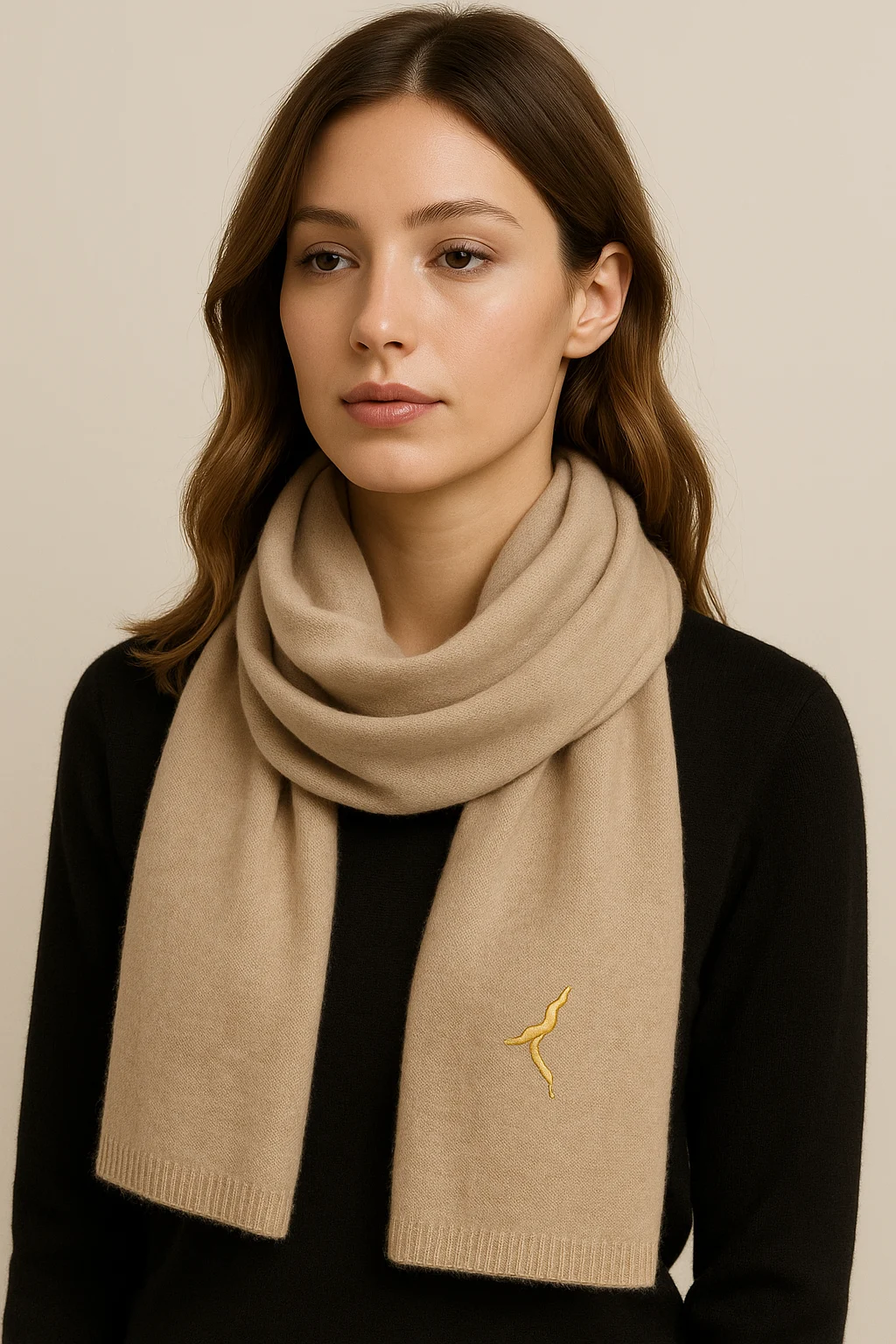
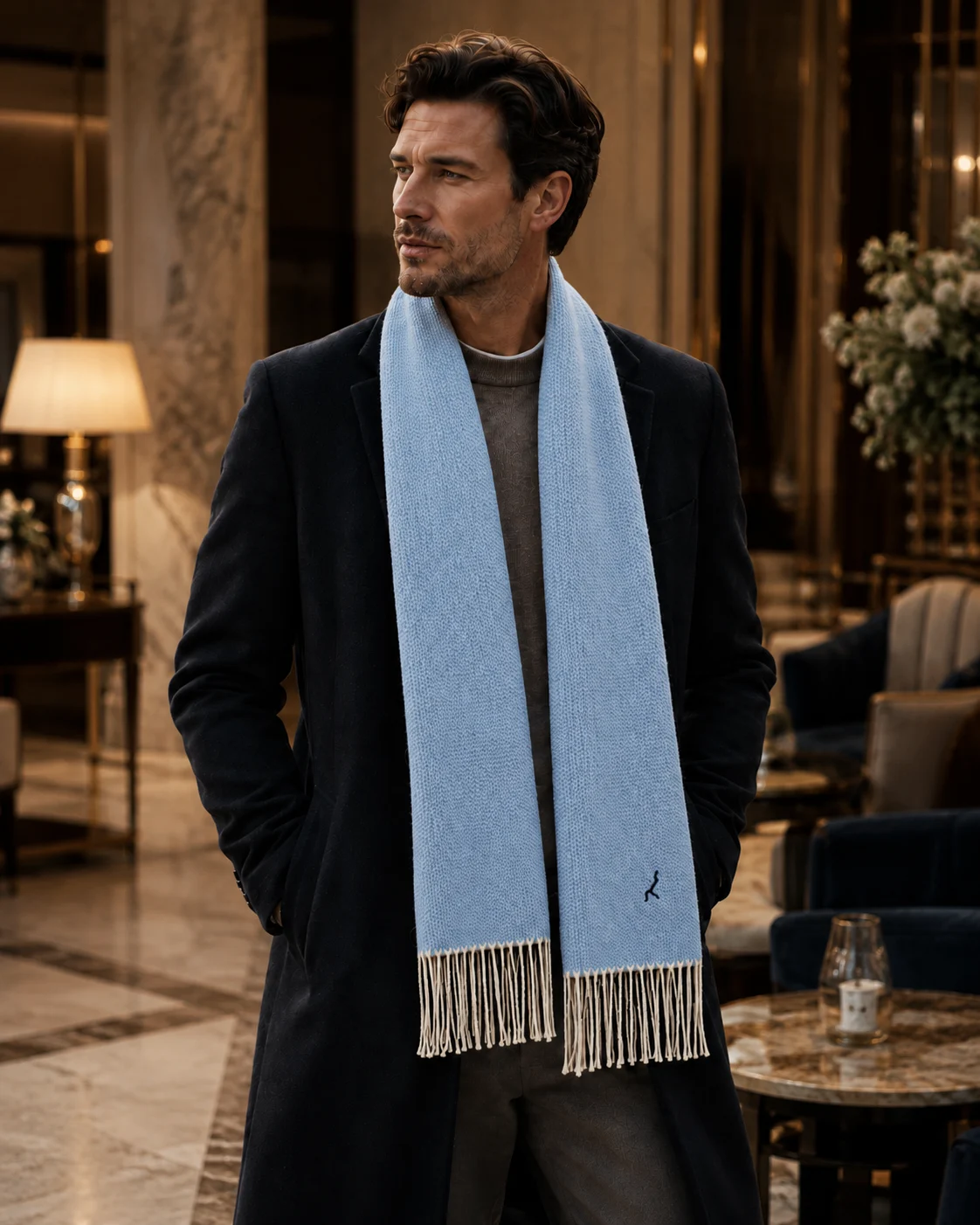
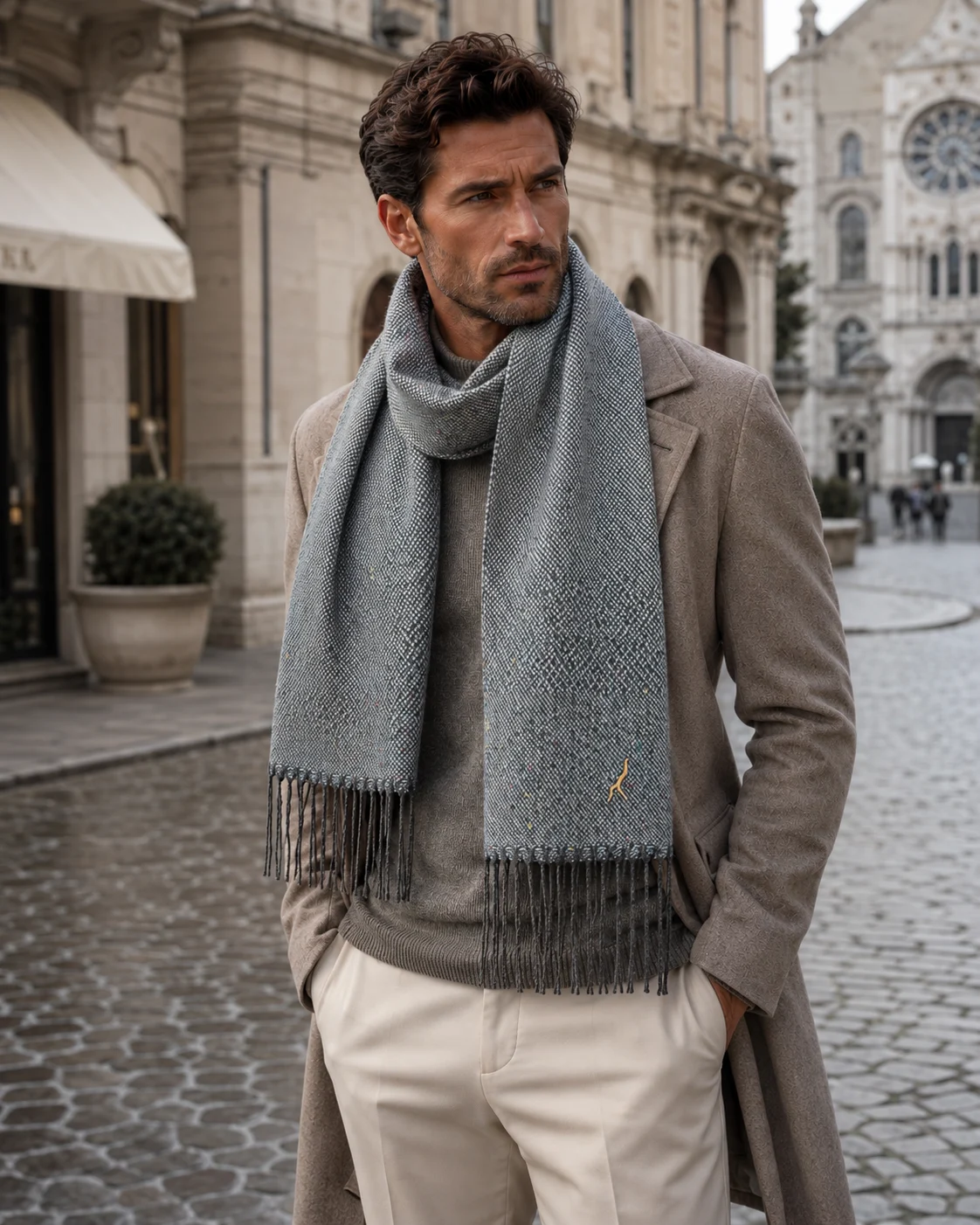
The Varenna is our 100% cashmere scarf: 190 x 35 cm, 120 euros, in four colours. It is the size we consider best balanced for everyday use — long enough to go twice round the neck, narrow enough to sit under a lapel without bulking.
Beige
The most versatile neutral: it works over navy, grey, black and camel coats, and holds up well against the warm tones of autumn. It is what we recommend for a first cashmere scarf.
Light blue
A pale blue that lightens dark coats and brightens the face on grey days. It suits anyone who often wears navy and grey and wants to step out of beige without taking a risk.
Grey
Grey is the most formal of the four: made for dark coats and an office wardrobe. It is also the colour that ages best, because it never goes out of fashion.
Purple
The boldest colour in the line, for anyone who uses a scarf as an accent. It works best over a single-colour coat that lets it speak.
Anyone looking for a wider format, to wear over the shoulders with a dress, will find the answer among the cashmere pashminas, where the Bellagio goes up to 140 x 140 cm.
Cashmere or wool: when each one makes sense
Cashmere is not always the right choice. Wool costs less, is more hard-wearing and copes better with heavy use: for a scarf worn on a bicycle, walking the dog, out in the rain every day, our Tremezzo in pure wool at 70 euros is the more sensible choice.
Cashmere wins elsewhere: weight for weight it is warmer, so it covers without volume, it is softer on the skin, it does not itch and it still looks elegant over an evening jacket. It is the piece you keep on at the restaurant, not the one you throw on the back seat of the car.
How to wear it, without overcomplicating things
Three ways cover ninety per cent of days. The simple loop, both ends in front and the scarf sitting under the lapel: the most formal. The slip knot, made by folding it in half and passing the ends through the loop, which holds better in wind. And draped open over the shoulders in the evening, when the scarf does the work of a light shawl.
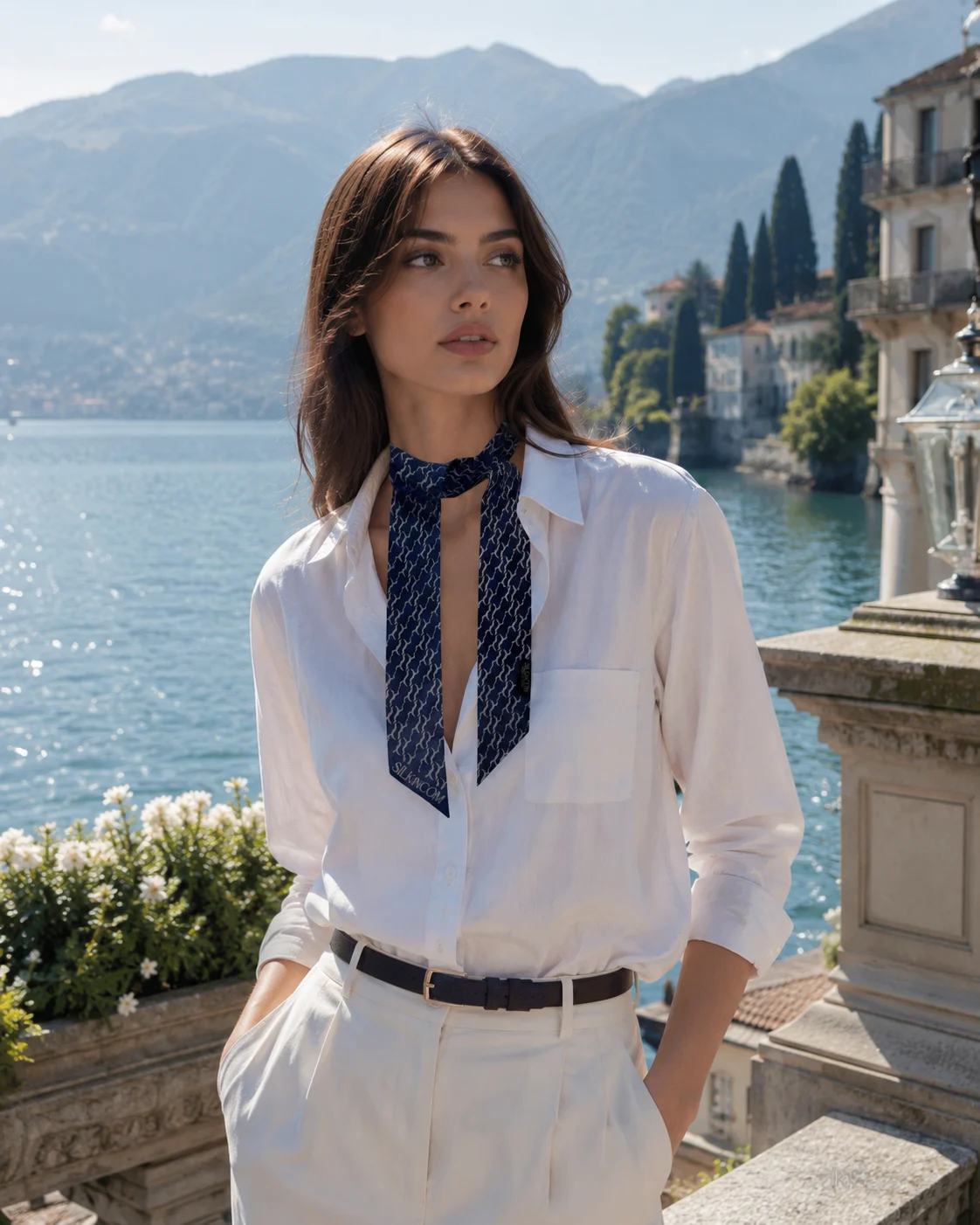
Anyone who wants more variations will find them in our guide on how to wear a Como scarf, which applies to cashmere and silk alike.
How long it lasts, and what ruins it
A well-treated cashmere scarf lasts fifteen or twenty years. What ruins it is not wear: it is the wrong wash, drying on a hanger and storage in plastic. The rules are few — lukewarm water, never wring, dry flat, store folded — and they are all on our product care page.
It is worth knowing before you buy, because it changes the arithmetic: a hundred and twenty euros spread over fifteen winters is eight euros a year for a piece worn almost daily from October to March.
The questions we are asked most
What is the right size for a woman?
For everyday use, 190 x 35 cm like the Varenna: it goes twice round the neck and sits under a coat without excess volume. For shawl-like use, over a dress, you want a wider format such as the 180 x 70 cm pashmina.
Does cashmere itch?
Good cashmere does not itch: the fibre is finer and shorter than wool and settles on the skin without prickling. If a cashmere scarf prickles, it has almost always been poorly combed and still contains coarse hair.
Which colour for a first scarf?
A neutral, beige or grey. It goes with every coat you already own and stays right for years, whereas a strong colour has to be coordinated and tires sooner.
Is it a good Christmas present?
Yes, and it is one of the few gifts that does not require guessing a size. A medium size and a neutral colour reduce the risk to a minimum, and the maison's gift box is included with every order.
How do I know it is real cashmere?
Look at the label, which must say 100% cashmere, and use your hands: the real fibre feels warm and dry, never slippery. The practical checks are in our guide on how to recognise a real cashmere pashmina, and they apply to a scarf as well.
A piece you choose once
The right scarf is the one that stops being a decision: you take it from the drawer without thinking, it works with this year's coat and with the next five, and at the end of the season it goes back folded into its cotton bag. That is worth more than any colour of the moment, and it costs less than it seems once you look beyond the first winter.