
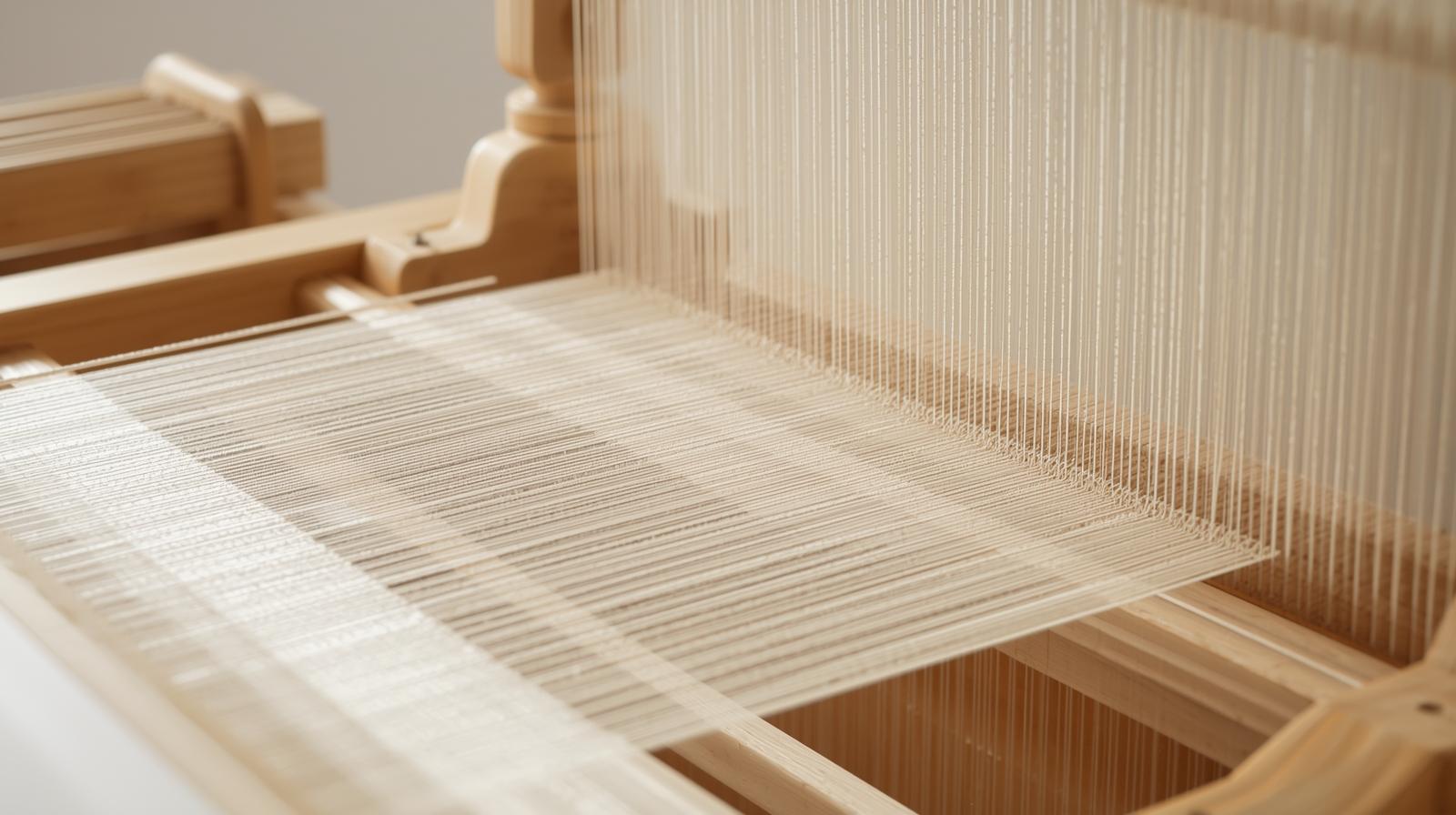
"From the first mulberry trees planted on the Lake Como hills in the 15th century to the contemporary silk district. Six centuries of silk worked on Lake Como."
Como is Italy's silk capital. It isn't a tourist slogan: it is the synthesis of a story that spans six centuries, shapes a landscape – the hills sloping down to the lake, once covered in mulberry trees – and rewires the economy of an entire territory. Understanding how silk became Como's identity means going back to the fifteenth century, crossing the era of the great manufactories, the industrial revolution, and arriving at the contemporary district that still supplies the world's luxury houses today.
The first records. As far back as the High Middle Ages, in Lombardy, mulberry was cultivated and the silkworm raised. But it is in the fifteenth century that sericulture around Como begins to take shape: the lake's mild climate, the abundance of water, the dense network of small farm plots make the territory ideal. Lakeside monks and noblemen see silk as a noble crop, capable of yielding income even from poor land. The first artisan filatures appear: small family workshops where the cocoon was treated, unwound and reduced to raw thread.
The sixteenth and seventeenth centuries are the centuries of consolidation. Como enters the European silk circuit thanks to its proximity to Milan and to the Alpine passes: raw fabrics produced on the hills reach the markets of Lyon, Antwerp, Nuremberg. The city develops a precise specialisation – fine yarn, light weft – that sets it apart from Florence and Venice, more focused on heavy fabrics and brocades.
The eighteenth century is the century of manufacturing apogee. Filatures multiply on the lakeshore and in the centres of the silk Brianza – Cermenate, Mariano, Fino Mornasco. Cottage work gives way to the first "factories": hydraulic workshops that harness watercourses to drive the spinning frames. The quality of Como's yarn becomes so sought after that the great Milanese and Lyonese merchants send permanent agents into the city to secure supply.
The industrial revolution arrives at the start of the nineteenth century. Andrea Vassalli, Pietro Pinchetti, the first great textile families introduce the mechanical loom, the jacquard apparatus, flat-bed printing. Como stops being just a producer of raw thread: it begins to dye, print, finish. The "Como printed fabric" is born, a product of the highest quality that becomes the world standard for ties, scarves and luxury linings.
Between the end of the nineteenth century and the early decades of the twentieth, what we now call the Como silk dynasty consolidates: Mantero (1902), then Ratti (1945), Clerici Tessuto, Cantoni, Canepa, Taroni. Each with a specialty – Mantero for printing, Ratti for jacquard weaving, Taroni for damask – yet all clustered within a few kilometres. It is the Italian district model taken to its highest expression: small and medium specialised enterprises that exchange semi-finished work, share labour, build a shared reputation.