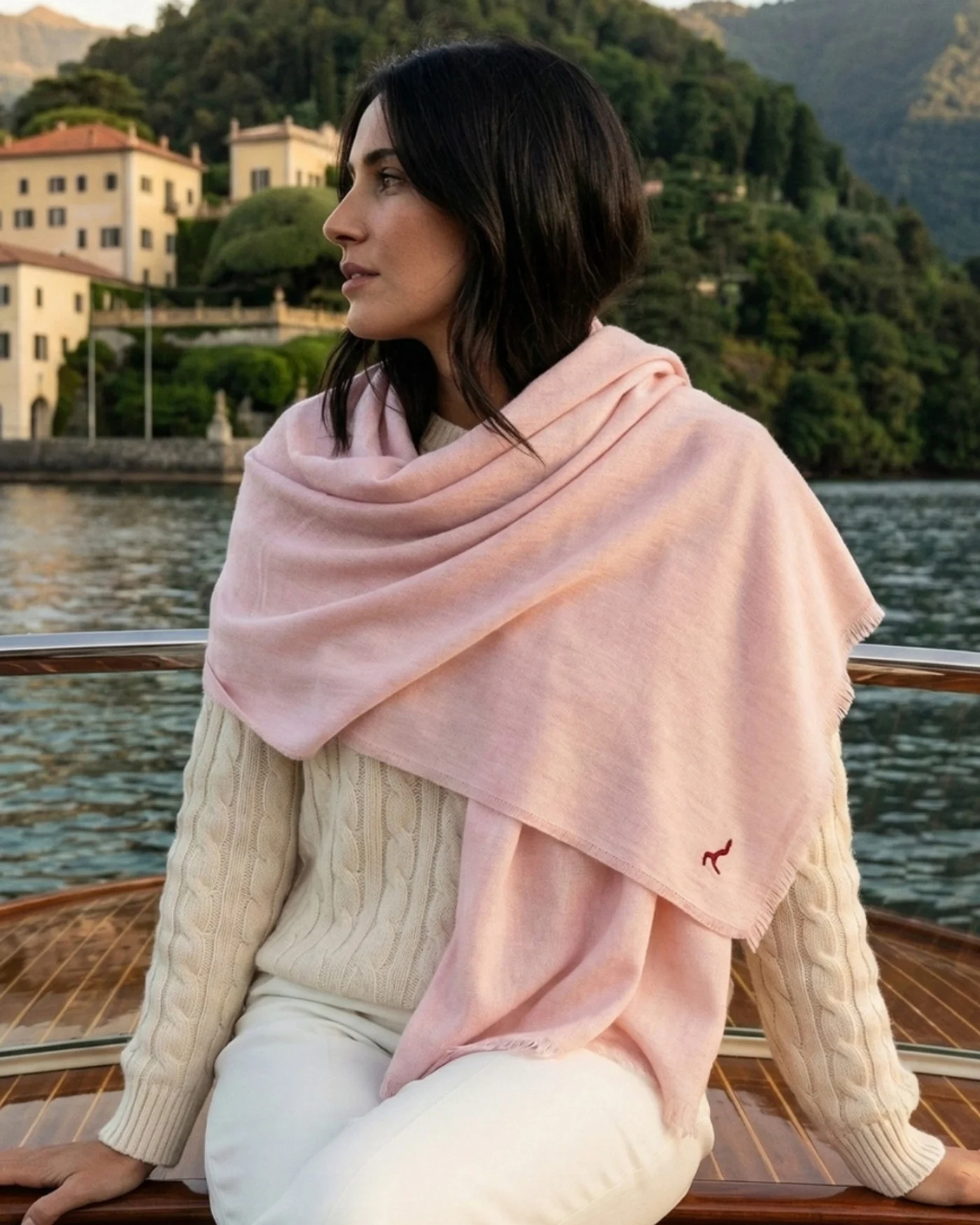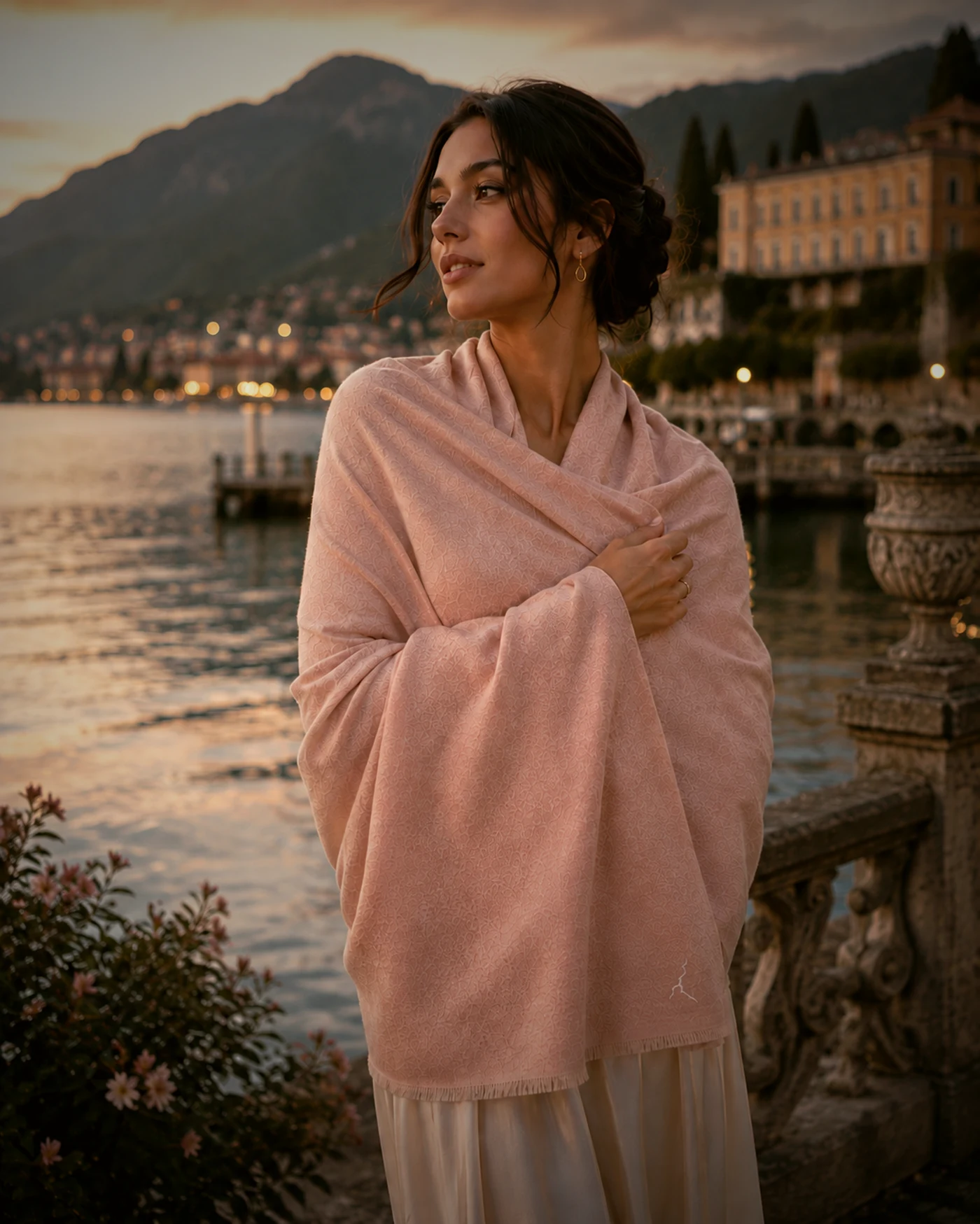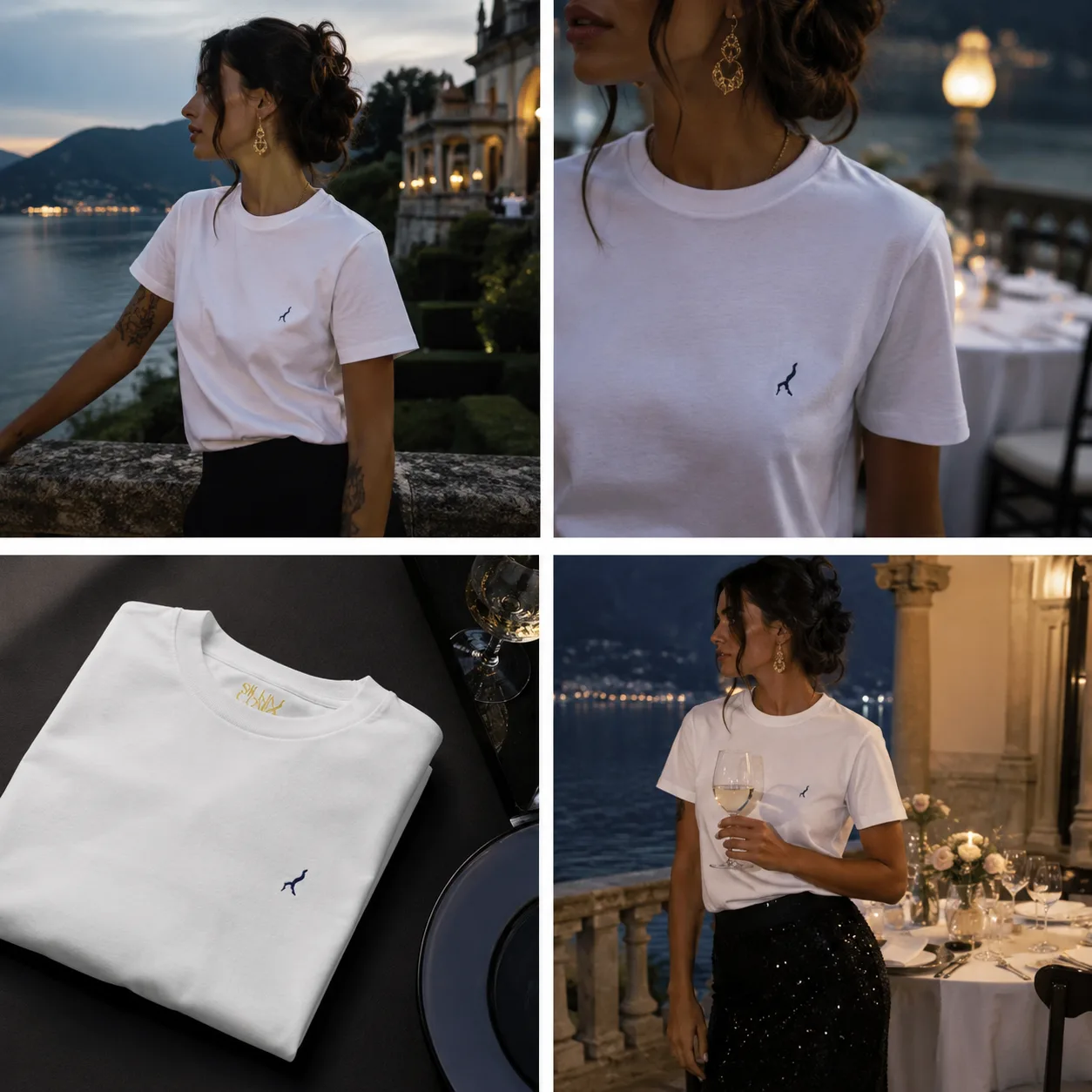

"Lake, city, boat: how to wear a men's linen shirt in summer, why its creases are a feature, and how to care for it season after season."
A men's linen shirt is the garment that separates the man who endures summer from the one who wears it with ease. When the sun beats down on Lake Como and the air sits still over the water, cotton clings and synthetics become a small torture. Linen does the opposite: it breathes, dries fast, lets the air through and cools against the skin. The fibre isn't the problem; how you wear it is. A linen shirt worn badly looks sloppy; worn with intent, it's the most elegant and least tiring way to dress in the heat.
Lake, city, boat: three ways to wear it
The same shirt changes register depending on where you are. By the lake, for an aperitivo in Bellagio or a stroll in Cernobbio, leave the shirt untucked, roll the sleeves twice above the wrist and undo the top two buttons. Nothing underneath: linen has enough body not to be see-through and is cool enough not to need a t-shirt. Pair it with sand-coloured cotton trousers or a light chino.
In the city, linen holds up in a more polished setting too, as long as you raise the rest a level. Shirt tucked in, a leather belt, clean-cut trousers and a suede shoe: the result is relaxed but deliberate, perfect for dinner or an office that doesn't demand a tie. Neutral tones, white, ecru, dusty blue, are the most versatile and the easiest to match.
On a boat, or for a day in full sun, linen is at its best. Keep it open over swim shorts or bermudas, sleeves up, collar soft. The only rule here: fewer layers, more air. It's a garment born for heat, so don't trap it inside a heavy look.
The charm of creases: why you shouldn't fear them
Many men avoid linen for fear it wrinkles. That's a misunderstanding. Linen's creases aren't a flaw to hide: they're the fibre's signature, the sign you're wearing a natural material and not a polymer that stays smooth because it's plastic. A lightly lived-in linen shirt carries a nonchalance that polyester will never imitate.
The secret is the difference between creases and crumpling. The first come from movement and fall softly; the second comes from neglect, from a shirt left balled up. To stay in the first camp takes little: hang the garment as soon as you take it off, give it a light press while still damp if you want a tidier effect, or leave it natural if you love the riviera look. The shirt is made exactly for this: a linen of the right weight that moves well and ages with grace.