"Fibre, dimensions, weight, drape. The qualities that set a pashmina apart from a classic scarf — and when to choose one over the other."
Pashmina and scarf are often used as synonyms, yet they are two distinct accessories — by origin, fibre, dimensions and the way they are worn. Understanding the difference is not a question of vocabulary alone: it helps you choose the right piece for your silhouette, your season, your wardrobe.
The origin of the word. "Pashmina" comes from the Persian pashm, meaning wool — and in particular the exceptionally fine wool of the Changthangi goats that live on the Ladakh plateau, between India, Nepal and Tibet, at over 4,000 metres. Originally a pashmina referred to a specific cloth — the fine yarn drawn from those goats' down — and, by extension, the shawl woven from that fibre. A scarf, by contrast, is a generic term: any rectangular accessory wrapped at the neck, whatever the fibre.
The fibre. An authentic pashmina is made from very fine cashmere, with a micronage (fibre thickness) between 12 and 16 microns. It is among the finest wools in the world. A scarf can be made from any fibre: cashmere, merino wool, silk, linen, cotton, synthetic blends. A "pashmina" in polyester or viscose is a commercial use of the name, not an authentic product.
The dimensions. The traditional pashmina is large: typical measurements are 200 × 70 cm, 180 × 90 cm, sometimes 200 × 100 cm. It is worn wrapped around the body, draped over the shoulders like a shawl, or knotted softly at the neck. A scarf is generally narrower: between 30 and 60 cm wide, with lengths between 150 and 200 cm.
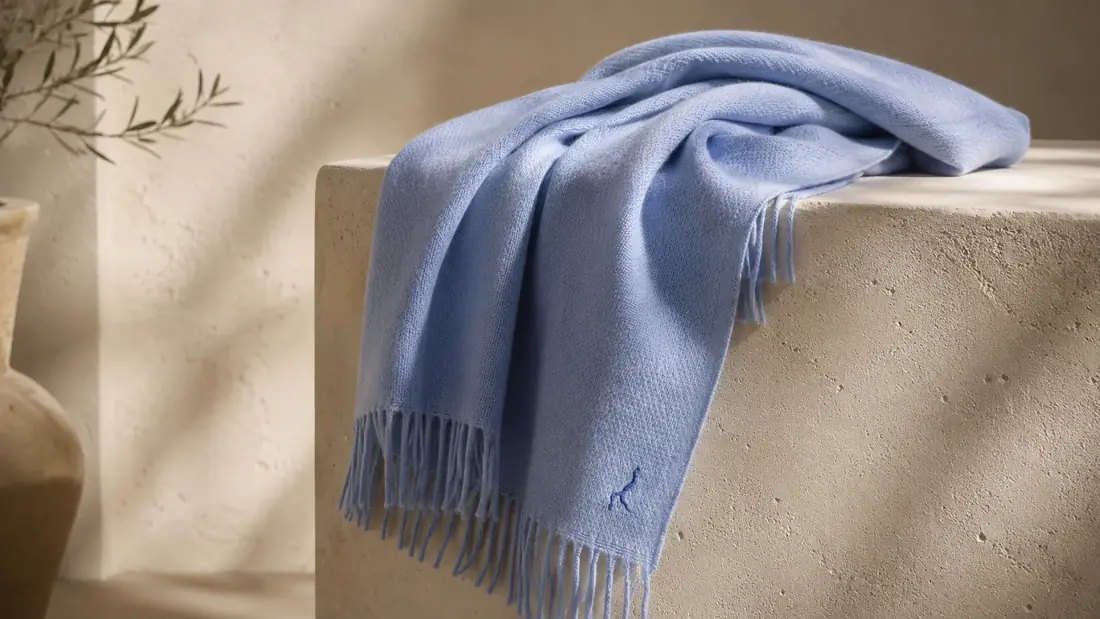
The weight and the drape. At around 100 to 150 grams per square metre, a pashmina is remarkably light for its volume. It falls softly, follows the movement of the body, rolls up into a small handbag without taking up space. A wool or cotton scarf is heavier, more structured, and holds its shape more firmly.
When to choose a pashmina. It is perfect for the in-between seasons and for cool evenings: the fine wool warms without weight, and the generous wrap offers more warmth than a simple wind at the neck. It is also ideal as a travel piece — plane, train — precisely because of its modest volume and its versatility: improvised blanket, evening shawl, enveloping scarf.
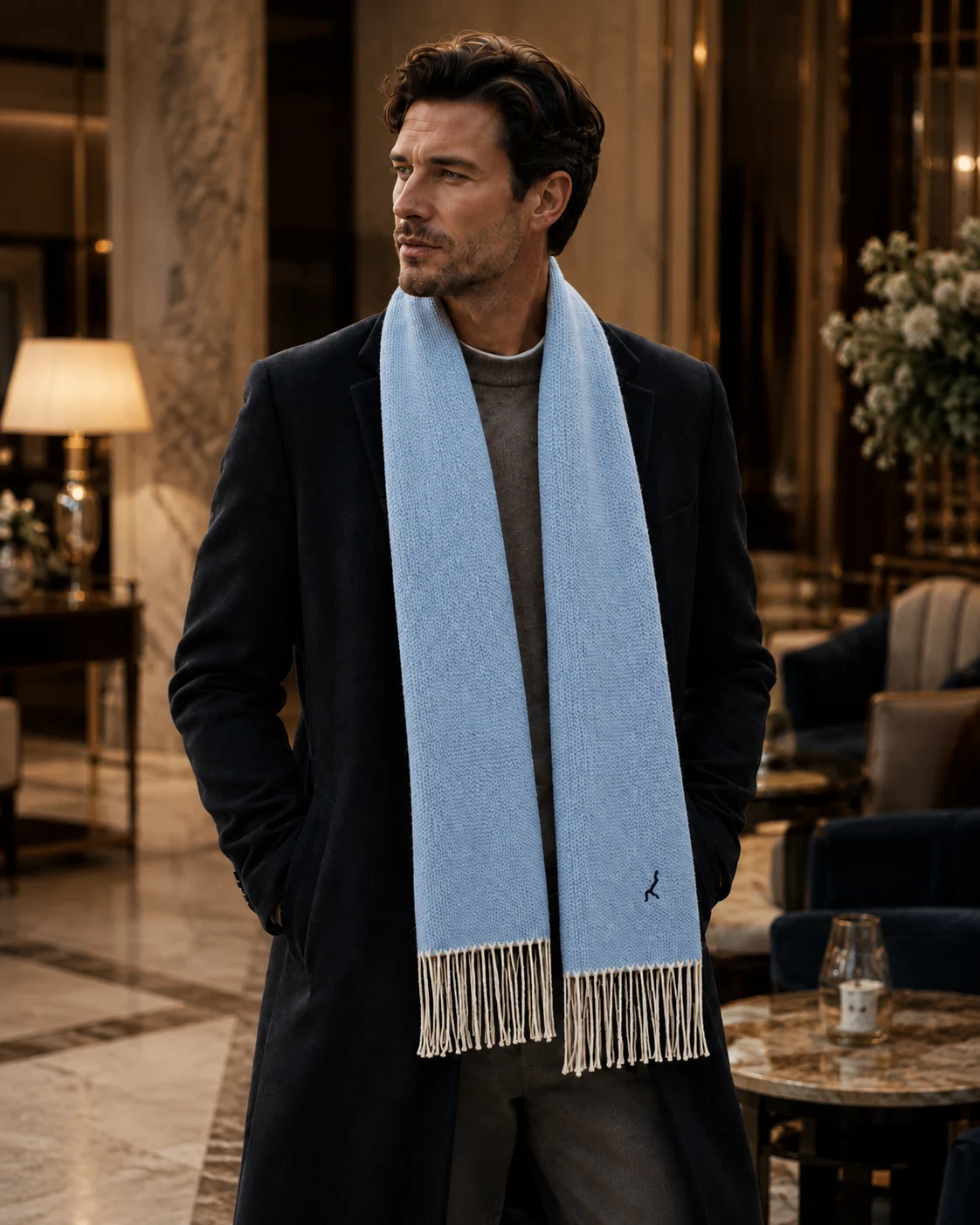
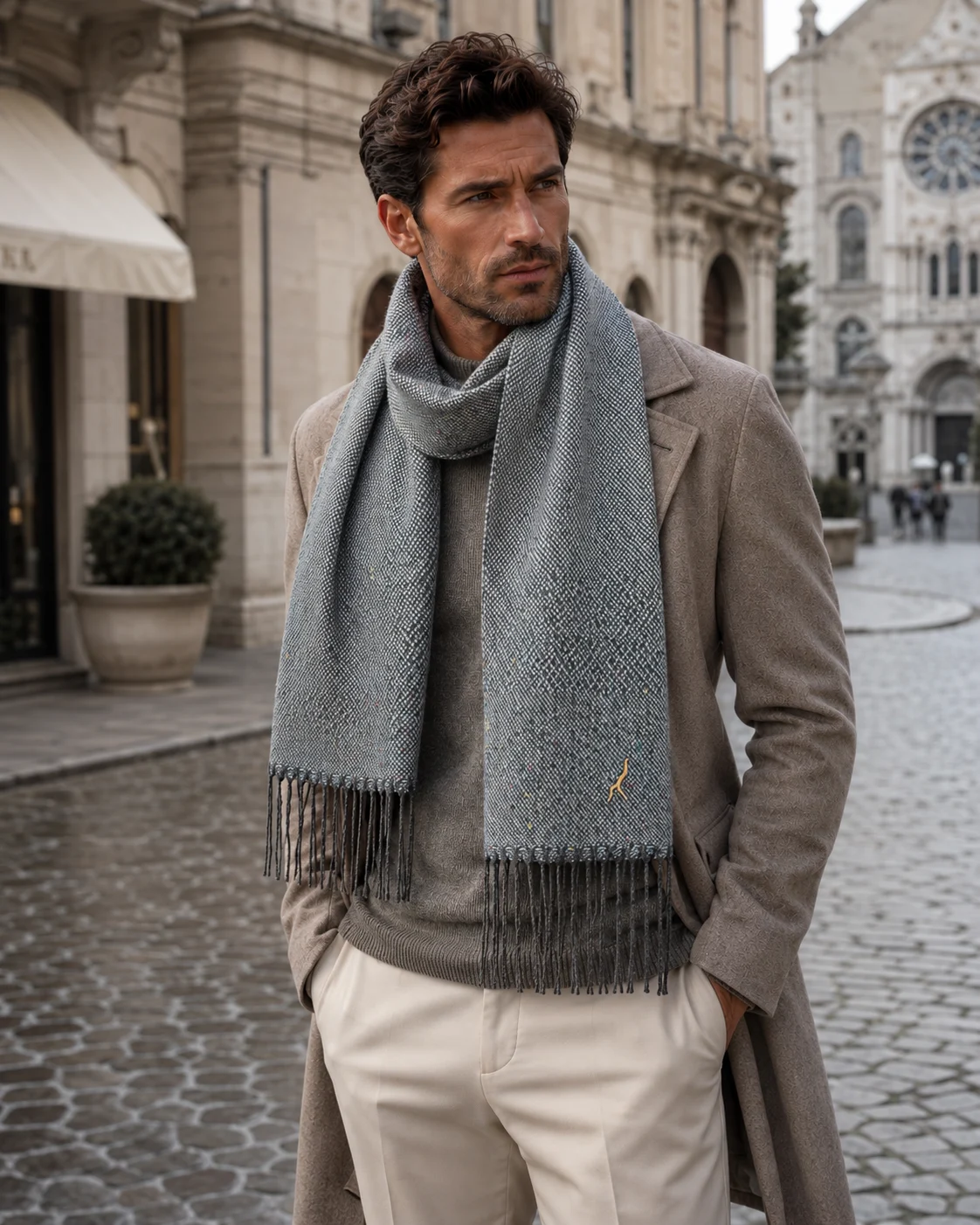
When to choose a scarf. The scarf is the everyday accessory par excellence. More discreet, easier to pair with coats and blazers, it lends itself to different knots (plain, Parisian, ascot). In winter, a scarf in pure cashmere or merino wool delivers concentrated warmth without the volume of a pashmina.
Our collections. At Maison SILKinCOM, the Bellagio collection brings together our pashminas in pure cashmere, in the traditional 180 × 70 and 180 × 45 measurements. The Cernobbio (cashmere) and Tremezzo (wool) collections are classic scarves, designed for everyday wear. Twilly Como is our take on the short scarf in pure silk — the pashmina's opposite, in scale and gesture.